Sponsored Research and Resource Projects
Fall 2026
Building a Confident and Smooth Transition to APA Style Writing Workshop Series
Project Developers: Amy Nguyen , M.A., Ed.D., Department of Psychology, and Eva Chan,
M.A., EOP Transfer Connect
 Throughout our experiences in teaching and advising at SJSU, we have observed a significant
level of stress and confusion many transfer students endure when they transfer to
SJSU and transition from MLA or from other writing styles to APA style writing for
coursework that require APA formatting, especially for students who were not exposed
to the APA writing format at their prior institutions. This common challenge transfer
students face can significantly impact their self-efficacy as well as their academic
performance and progress at SJSU.
Throughout our experiences in teaching and advising at SJSU, we have observed a significant
level of stress and confusion many transfer students endure when they transfer to
SJSU and transition from MLA or from other writing styles to APA style writing for
coursework that require APA formatting, especially for students who were not exposed
to the APA writing format at their prior institutions. This common challenge transfer
students face can significantly impact their self-efficacy as well as their academic
performance and progress at SJSU.
 The 4-part APA Style writing workshop series is designed to alleviate the level of
stress and confusion many transfer students encounter and help them prepare for their
upper-division coursework and/or collaborative projects at SJSU when APA formatting
is required. Apart from addressing the guidelines of APA formatting, the workshop
series also serves as a virtual space for transfer students to share their challenges
in academic writing upon transferring to SJSU.
The 4-part APA Style writing workshop series is designed to alleviate the level of
stress and confusion many transfer students encounter and help them prepare for their
upper-division coursework and/or collaborative projects at SJSU when APA formatting
is required. Apart from addressing the guidelines of APA formatting, the workshop
series also serves as a virtual space for transfer students to share their challenges
in academic writing upon transferring to SJSU.
Logistics: The workshop series is open to all incoming SJSU transfer students. Each session of the series will address a specific topic that is essential to APA formatting. Students will have the option to participate in any and/or in all of the four sessions. A set of pre-workshop and post-workshop survey questions will be used to measure workshop attendees’ preparedness for and confidence in using the APA writing format.
In addition, a community-building theme will be included at each workshop to provide a supportive environment for transfer students who are at various levels of familiarity with APA formatting to ask questions and learn together. Besides educating transfer students on the essential aspects of APA formatting, each session will include an interactive exercise to enhance students’ learning outcomes
Mindfulness Music to Enhance Writing Activities
Researcher: Steve Tash, School of Information
 The goal of this research project is to help college students achieve a more stress-free
writing environment through engaging with "mindful music" selections while writing
specific assignments such as blog posts and research papers.
The goal of this research project is to help college students achieve a more stress-free
writing environment through engaging with "mindful music" selections while writing
specific assignments such as blog posts and research papers.
I am trying an experiment in which I incorporate specific "mindfulness" strategies to help my students relax and reduce their stress levels. I will ask each of my students to play/listen to a musical selection before starting each new writing assignment in my INFO 200 Course.
Looking for a way to reduce student anxiety and stress when completing writing assignments as my course includes three research papers and eight blog reports.
- I believe listening to these specific mindfulness music selections will make students more efficient in completing their writing assignments.
- Hope to see some evidence that mindfulness music may reduce student stress or anxiety levels after students listen to these music compositions before each written assignment.
- Would like to see student feedback that these particular mindfulness musical selections influenced the "flow" of student ideas.
Participation is completely voluntary. The listening activity is not graded, will not affect students' grade in any way, and is not required in order to complete any assignment. They may complete all course assignments without listening to the music selections. I am simply offering this as a possible strategy to help reduce stress and support focus.
The primary deliverables expected from this research project include:
- Curated Music Selection List: A specific set of "mindfulness music" compositions curated.
- Stress and Anxiety Assessment Data: Voluntary student survey at end of term to evaluate whether student stress and anxiety levels when using mindfulness strategies prior to writing worked or not.
- Collected student responses evaluating how the musical selections affected their creative "flow," efficiency, and overall writing experience.
Developing an AI-Assisted Revision and Scaffolding Tool for STEM Writing
Researcher: Jingyi Xie, Department of Industrial and Systems Engineering
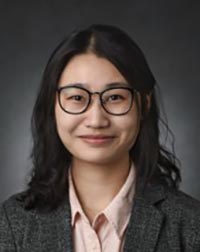 In my experience teaching STEM courses, I have observed that many students repeatedly
struggle with common academic writing challenges, such as informal academic tone,
wordiness, and tense inconsistency. Although lectures and feedback help students improve
specific issues, many continue to demonstrate other common writing problems in later
assignments. This suggests that students may benefit not only from revising their
own writing, but also from practicing how to identify and revise common academic writing
issues across a variety of examples.
In my experience teaching STEM courses, I have observed that many students repeatedly
struggle with common academic writing challenges, such as informal academic tone,
wordiness, and tense inconsistency. Although lectures and feedback help students improve
specific issues, many continue to demonstrate other common writing problems in later
assignments. This suggests that students may benefit not only from revising their
own writing, but also from practicing how to identify and revise common academic writing
issues across a variety of examples.
This research and resource project will investigate recurring writing challenges in authentic, anonymized STEM student writing and develop an AI-assisted writing support tool with two components: (1) a practice and revision module that uses authentic examples of common writing issues to provide AI-assisted revision exercises and generate similar practice examples; and (2) a writing scaffolding module that helps students apply those revision skills to their own STEM writing through section-specific guidance on the purpose, organization, and content of each section. Project deliverables will include a categorized library of common STEM writing challenges, an AI-assisted writing support tool built as a custom GPT, and instructional recommendations for faculty interested in integrating AI-assisted writing support into GWAR and other writing-intensive courses.
Writing for Engagement in the Age of AI
Researcher: Rebecca Kling, Department of English
 This project will investigate how faculty across disciplines use writing to foster
student engagement, critical thinking, intellectual curiosity, and a growth mindset
in the age of generative AI. Through faculty interviews, student feedback, and scholarly
research, the project will identify writing practices that encourage critical thinking
and reduce over-reliance on AI-generated work by making writing feel more cognitively
engaging, process-oriented, and grounded in student agency, choice, and intellectual
ownership. Sample areas of investigation may include handwriting to improve cognition,
writing-to-learn classroom activities, low-stakes writing assignments, first-person
or reflective writing where appropriate to the discipline, scaffolded writing processes,
and other pedagogical practices that encourage authentic engagement and intellectual
investment.
This project will investigate how faculty across disciplines use writing to foster
student engagement, critical thinking, intellectual curiosity, and a growth mindset
in the age of generative AI. Through faculty interviews, student feedback, and scholarly
research, the project will identify writing practices that encourage critical thinking
and reduce over-reliance on AI-generated work by making writing feel more cognitively
engaging, process-oriented, and grounded in student agency, choice, and intellectual
ownership. Sample areas of investigation may include handwriting to improve cognition,
writing-to-learn classroom activities, low-stakes writing assignments, first-person
or reflective writing where appropriate to the discipline, scaffolded writing processes,
and other pedagogical practices that encourage authentic engagement and intellectual
investment.
The project will culminate in the creation of practical teaching resources and a one-day workshop for faculty across the university. The workshop will share adaptable strategies for designing writing assignments and classroom practices.
SJSU Writing-Intensive Assignment Repository: 100W and 100WB SJSU Upper-Division Writing
Assignments
Researcher: Nathapong Shugan
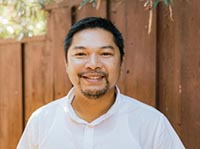 This repository gathers writing-intensive assignments across San Jose State University’s
Upper-Division Writing Requirement courses (starting with 100W and 100WB) to directly
address common hurdles faced by many of our upper-division and transfer students.
At its core, the repository aims to archive and showcase some of our amazing faculty
assignments while generating campus-wide conversations, inspiring new pedagogical
approaches, and encouraging creative assignment options that extend critical thinking
and deepen learning. By serving as an accessible central hub, the platform supports
faculty in designing impactful coursework, highlights innovative assignment structures,
and fosters a collaborative teaching community across intensive writing classes.
This repository gathers writing-intensive assignments across San Jose State University’s
Upper-Division Writing Requirement courses (starting with 100W and 100WB) to directly
address common hurdles faced by many of our upper-division and transfer students.
At its core, the repository aims to archive and showcase some of our amazing faculty
assignments while generating campus-wide conversations, inspiring new pedagogical
approaches, and encouraging creative assignment options that extend critical thinking
and deepen learning. By serving as an accessible central hub, the platform supports
faculty in designing impactful coursework, highlights innovative assignment structures,
and fosters a collaborative teaching community across intensive writing classes.
Special Note: From my past experiences, many incoming transfer students (particularly those entering disciplines with APA style) experience significant anxiety and feel underprepared for upper-division writing expectations. For many, transitioning abruptly from MLA or other citation styles used in community college coursework creates confusion and hinders writing confidence.
Building a robust and sustainable assignment repository relies on patience, cross-departmental collaboration, and continuous community input. I invite faculty members and campus partners from across all disciplines to share their writing-intensive assignments, pedagogical insights, and feedback. Whether you have an innovative prompt to showcase or suggestions for improving the repository, your contributions are essential to making this a vibrant, lasting resource for our entire academic community.
Our presentation in Spring 2027 will provide an overview of Repository Resources & Goals through:
- Curriculum-Integrated Assignments: Sample assignments and writing prompts from 100W/100WB courses designed to reinforce formatting, mechanics, and academic integrity within discipline-specific contexts.
- Faculty Reflection & Feedback: Spaces for instructors across disciplines to share reflections, peer feedback, and insight on what works in the classroom.
- Responsive Practices: Relevant assignments and strategies tailored to our rapidly evolving academic and technological landscape.
- Community & Mentorship Hub: A resource for new writing-intensive instructors with support from other faculty to share amazing assignments, and provide a platform for effective teaching.
Fall 2025
Workshop Series: Building a Confident and Smooth Transition to APA-Style Writing
Researchers: Amy Nguyen, Department of Psychology, and Eva Chan, EOP Transfer Connect
In our experiences of working with transfer students (i.e., in the classroom and at
advising sessions), we have observed that many transfer students within disciplines
that use APA-style writing feel pressure and unprepared when it comes to writing in
the APA format upon transferring to SJSU. One potential challenge is the transition
from using the MLA format and other writing formats for their prior coursework at
community colleges to using APA-style. This transition can be abrupt and confusing,
especially if transfer students were not exposed to APA-style writing at their prior
institutions.
This four-part workshop series will introduce APA-style writing to transfer students (starting with the Fall 2025 cohort) in collaboration with the EOP Transfer Connect program at SJSU. Each session will address a specific topic for APA-style writing such as how to incorporate in-text citations, formatting reference citations, the difference between primary and secondary sources, as well as how to synthesize and analyze research while avoiding plagiarizing. Students will be given a pre- and post-test to measure the level of confidence in and preparedness for writing in APA style before and after each workshop. The goal of this research project is to help transfer students achieve a smooth and confident transition to APA-style writing through engaging and interactive writing exercises in addition to learning from lessons throughout the workshop series.