Bachelor of Science in Nursing (BSN)
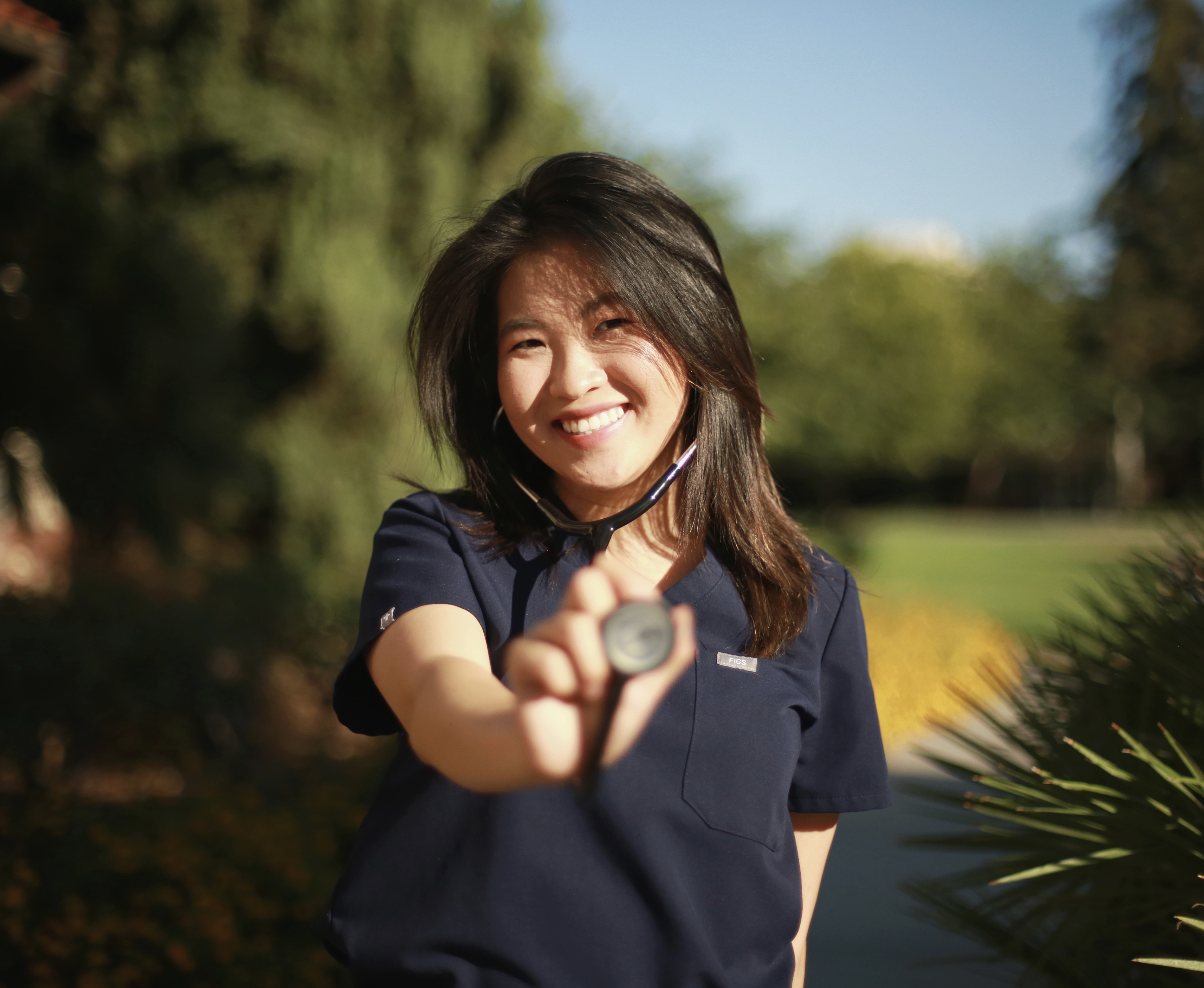
The Valley Foundation School of Nursing has taught me about the beauty and compassion in nursing. I’m grateful for all the opportunities that the program has given me, and I will apply everything that I learned into the clinical setting to positively impact the wellbeing of patients and healthcare workers."
— Anh Truong, BSN Class of 2024
About the BSN Program
 The Bachelor of Science in Nursing (BSN) pre-licensure program is an in person, full-time
program for candidates new to nursing.
The Bachelor of Science in Nursing (BSN) pre-licensure program is an in person, full-time
program for candidates new to nursing.
The program prepares individuals for professional nursing practice in a variety of institutional and community settings, as well as for graduate study and roles as nurse leaders.
Extended campus facilities include a wide variety of community healthcare agencies for clinical experience. The School of Nursing has integrated extensive simulation labs which provide an enhanced learning experience.
BSN Overview
- Open to California residents who are not already registered nurses
- Is full-time, occurring over five (5) semesters (academic year, Fall and Spring)
- Clinical hours are earned through a variety of settings, including: hospitals, public health, long term care, and community health agencies
- Upon completion of the program, students are prepared and eligible to take the national licensing exam to become a registered nurse (NCLEX-RN)
- Graduates are eligible for Public Health Nursing certification in California upon licensure as a Registered Nurse
Accreditation
The baccalaureate degree program in nursing at San José State University is accredited by the Commission on Collegiate Nursing Education (http://www.ccneaccreditation.org).
The BSN program is approved by the California Board of Registered Nurses. Please see Professional Licensure and Disclosure information.
Mission and Goals
The mission of the BSN program is to provide educational excellence in the science and art of professional nursing to empower our graduates to be responsible and knowledgeable clinicians, leaders, and scholars who strive to meet changing global healthcare needs.
Program goals are to: provide a liberal and professional education as a foundation for practice and advanced nursing education; promote an attitude of intellectual inquiry and competency in critical analysis; and to utilize evidence-based practice strategies; and to prepare the BSN graduate for leadership in traditional and emerging roles in response to changing community needs.
The program also seeks to prepare the BSN graduate to; develop a sound theory base for using the nursing process in primary, secondary, and tertiary prevention of health problems; and establish collaborative relationships with other healthcare professionals.
The program proudly works in alignment with the mission and goals of our parent collage, the College of Health and Human Sciences, and those of San José State University.
Program Learning Outcomes. Academic Year 2025-2026
- Conduct comprehensive focused assessments of biological and social determinants of health and illness in clients, using culturally appropriate approaches.
- Use the nursing process to provide holistic client-centered care that demonstrates the safe application of the pathophysiological, medical, and nursing management of common acute and chronic illnesses, and health promotion.
- Deliver client-centered education that integrates the application of developmental stages across the lifespan, cultural background, educational level, and health literacy considerations.
- Act as an advocate to develop collaborative, evidence-based strategies for interprofessional, client-centered care.
- Demonstrates accountability for safe administration and evaluation of pharmacologic agents and complementary modalities used in health promotion as well as acute and chronic illnesses.
- Use relevant technology and informatics to support nursing care that contributes to safe and high quality client outcomes.
- Communicate effectively with clients and members of the interprofessional healthcare team to improve client outcomes
- Demonstrate beginning levels of clinical judgment, systems thinking, and accountability for client outcomes when delegating to and supervising other members of the healthcare team.
- Assumes responsibility for and evaluates own professional nursing practice according to the ethical standards of the ANA Code for Nurses, standards of nursing practice, and legal mandates.
- Coordinate healthcare for clients and populations across the lifespan to maximize health, independence, functional ability, and quality of life.
- Analyze the influence of the social determinants of health, health care policy, financial drivers, and regulatory environments on nursing practice in the global community.
Program Learning Outcomes. Academic Year 2026-2027
1. Apply knowledge for nursing practice with other disciplines to form the basis for clinical judgment and innovation.2. Provide holistic person-centered compassionate care including respectful communication for patients within the context of their social environment (including family and/or important others) across the lifespan.
3. Collaborate with community partners (public health, industry, academia, health care, local government, and others) to plan and deliver population health prevention and disease management.
4. Demonstrate scholarship for the nursing discipline by the generation, synthesis, translation, application, and dissemination of knowledge and evidence-based practice to improve and transform healthcare.
5. Responsible for high-quality and safe patient care by minimizing risk of harm to patients and their environments through individual performance and system effectiveness.
6. Build interprofessional partnerships by working as a team to optimize care and enhance positive healthcare outcomes.
7. Utilize systems-based practice to explore the social determinants of health, health care policy, and financial drivers to provide inclusive and equitable care to diverse populations.
8. Use informatics and healthcare technologies to provide care, gather data, inform decision-making and improve the delivery of quality care.
9. Act as a nursing professional with comportment that reflects the American Nurses Association (ANA) Code of Ethics for Nurses, Standards of Nursing Practice and California Nurse Practice Act.
10. Develop personal, professional, and leadership qualities by participating in activities that contribute to personal health, resilience, well-being, lifelong learning, and support nursing expertise.
Degree Requirements
Degree requirements (including additional details about; the program’s offerings, outcomes, recruitment and admission policies, grading policies, degree/certificate completion requirements, tuition, and fees) can be found in the university's catalog.
The BSN Roadmap outlines prerequisites, classes in the program and their order, and requirements to graduate.
- BSN Roadmap AY 25-26
- BSN Roadmap AY 26-27 (New Curriculum)
BSN Admission Requirements
Review the requirements to apply to the BSN program.
BSN Information Sessions
Learn about the BSN program prior to applying.
BSN FAQs
Read frequently asked questions for the BSN program.
Announcements and Current Events